
The Best Sourdough Books in 2026, Compared Honestly
I get asked "which sourdough book should I buy?" almost every week. I wrote one of the books on this list, so read my ranking with that in mind. I have tried to be fair, and I say clearly where another book is the better choice. The short version is that most sourdough books teach one method. A few teach you to read your dough. Pick the one that matches what you actually want to learn.
Last updated: September 17, 2026. I revisit this list once a year.
Disclosure: I wrote the book at number one. It is free to read, so you can check my claim without spending a cent, and I say below where each other book is the better buy.
How I compared them
I read every book on this list cover to cover and baked from each of them. I judged four things:
- Does it explain why? Can you fix a failed loaf after reading it, or only repeat the recipe and hope?
- Does it work in a normal kitchen? With supermarket flour, a home oven and a job that gets in the way of feeding schedules.
- How much do you need to know first? Some books assume nothing. Some assume you already bake.
- What do you get for the money? Two of these books are free or nearly so. That matters for a hobby you might not stick with.
Here is the list, in the order I would read them if I were starting again.
1. The Sourdough Framework, Hendrik Kleinwächter (2022, free, hardcover 2023)
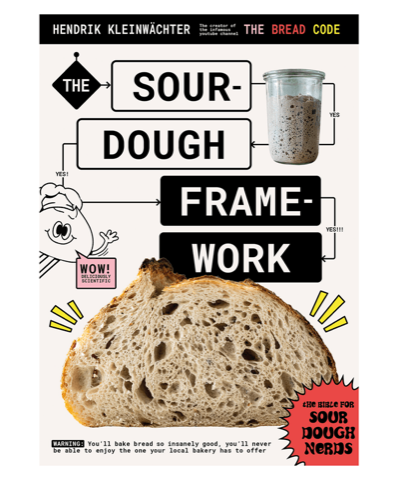
Best for: understanding why your bread turned out the way it did.
This is my book, so discount my enthusiasm. Here is the case for it anyway. It is not a recipe collection. It walks through the variables that every recipe silently assumes: what your flour can absorb, how temperature drives fermentation, what a strong starter looks like, when bulk fermentation is done, how to read a crumb and trace a problem back to one decision. It is built around flowcharts and tables because I am an engineer and that is how I think. Ars Technica called it “a sourdough baking framework” hosted on GitHub, which is accurate: the whole book is open source, free to read online, and available in nine languages.
Weakness: it has few recipes and no glossy photography. If you want thirty breads to bake through, buy The Perfect Loaf as well.
Price: free online, or a 250-page hardcover (ISBN 978-3-00-077702-8) for the kitchen counter. Rated 5.0 by 110 readers on my shop.
2. The Perfect Loaf, Maurizio Leo (2022)
Best for: the one book to buy if you want recipes and technique together.
Maurizio is, like me, a software engineer who fell into bread, and it shows in the best way. The book is long (432 pages), methodical and photographed step by step. Starter care, timelines, hydration, shaping and scoring are all explained properly, and then there are dozens of recipes that actually work. It won the 2023 James Beard Award for baking. If a friend asks for one physical sourdough book and does not want to read mine first, this is what I tell them to buy.
Weakness: it is a big book with long timelines, and it can feel like a lot for a first loaf. The explanations sit inside recipes rather than being organised as a system, so troubleshooting means flipping back and forth.
3. Flour Water Salt Yeast, Ken Forkish (2012)
Best for: repeatable schedules and learning baker’s percentages.
The classic that taught a generation of home bakers to think in percentages and to respect time and temperature. The chapters on fermentation and dough handling are still excellent, and the bread schedules are precise enough to follow on a work day. It won the 2013 James Beard Award. About half the book covers yeasted breads, which is either a bonus or a distraction depending on why you are here.
Weakness: the recipes make a lot of dough and lean on a Dutch oven, and the sourdough chapters assume you already have a strong starter. The science is practical rather than explained.
4. Tartine Bread, Chad Robertson (2010)
Best for: the open, blistered country loaf and developing intuition.
This book started the modern home sourdough movement. The country loaf method, the long folding chapter and the photography still hold up. Robertson teaches you to watch the dough rather than the clock, which is the right instinct.
Weakness: it is the least beginner-friendly book on this list. The instructions are narrative, hydration is high, and there is almost no troubleshooting. Many readers bake flat loaves from it for months before something clicks. Read it after you understand fermentation, not before.
5. Artisan Sourdough Made Simple, Emilie Raffa (2017)
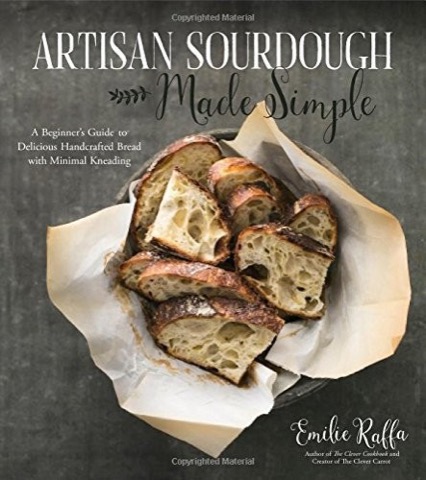
Best for: a first loaf this weekend with minimal theory.
Emilie’s book is the gentlest entry on the list. Overnight bulk fermentation, one bowl, a master recipe and then variations, plus a good chapter on using discard. It removes the fear.
Weakness: because it keeps theory to a minimum, it does not tell you what to change when the master recipe fails in your kitchen. Pair it with a book that explains the variables and you have a complete set.
6. Sourdough by Science, Karyn Lynn Newman (2022)
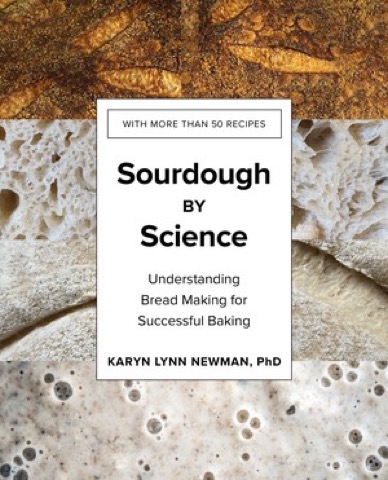
Best for: the biology and chemistry, explained by a scientist.
Newman is a PhD scientist and the book reads like a well-run lab notebook with photographs of what each stage should look like. The explanations of microbiology and gluten are among the clearest in print.
Weakness: the recipe section is smaller and the method is more rigid than the science would suggest. It is a great second book, not a first.
7. Bread Science, Emily Buehler (2006, updated 2021)
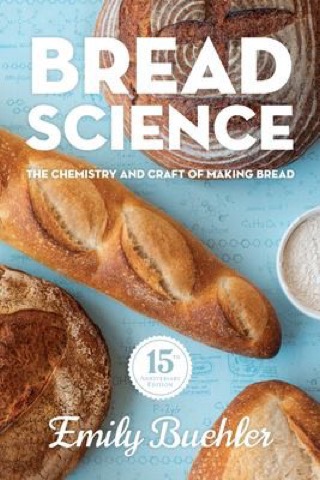
Best for: readers who want the chemistry, not a cookbook.
A compact tour of what happens in dough, from enzyme activity to gluten networks to crust formation, written by a chemist who baked professionally. It is the book I reach for when I want to check a claim.
Weakness: it is not sourdough specific, it has aged in places, and there are almost no recipes. Buy it to understand, not to bake from.
8. The Sourdough School, Vanessa Kimbell (2018)
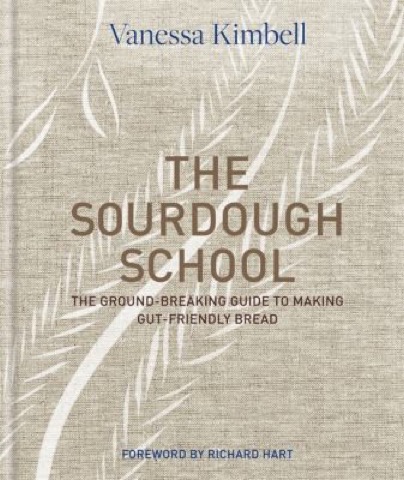
Best for: nutrition, digestion and whole grains.
Kimbell approaches sourdough from the health side: long fermentation, gut health, stoneground flours and botanical blends. It is beautifully produced and fills a gap the technique books ignore.
Weakness: the technique coverage is thinner and the health framing is sometimes stronger than the evidence. If your goal is a reliable loaf, one of the books above will get you there faster.
Also worth knowing
If you learn better by watching, I keep a separate list of the sourdough YouTube channels I recommend, grouped by what each one is good at.
Jeffrey Hamelman’s Bread is the professional reference and worth owning once you bake regularly. Modernist Bread is five volumes of research at a price that puts it in a different category. Both go deeper than anything here, and neither is where I would start.
My recommendation
- Complete beginner who wants a loaf this weekend: Artisan Sourdough Made Simple.
- You want to understand what is happening in the dough: The Sourdough Framework (free), then The Perfect Loaf for recipes.
- You like precise schedules and percentages: Flour Water Salt Yeast.
- You are chasing the bakery-style open crumb: Tartine Bread, once you can read fermentation.
- You want the science in depth: Sourdough by Science, then Bread Science.
If you only take one thing from this page: read the free book first, because it costs nothing, and then buy the book that matches the bread you want to make. Your loaves will tell you when you have understood enough.
Cover images via Open Library, used to identify each book.